Stock Market Trends: The Role of Technology in Economic Recovery
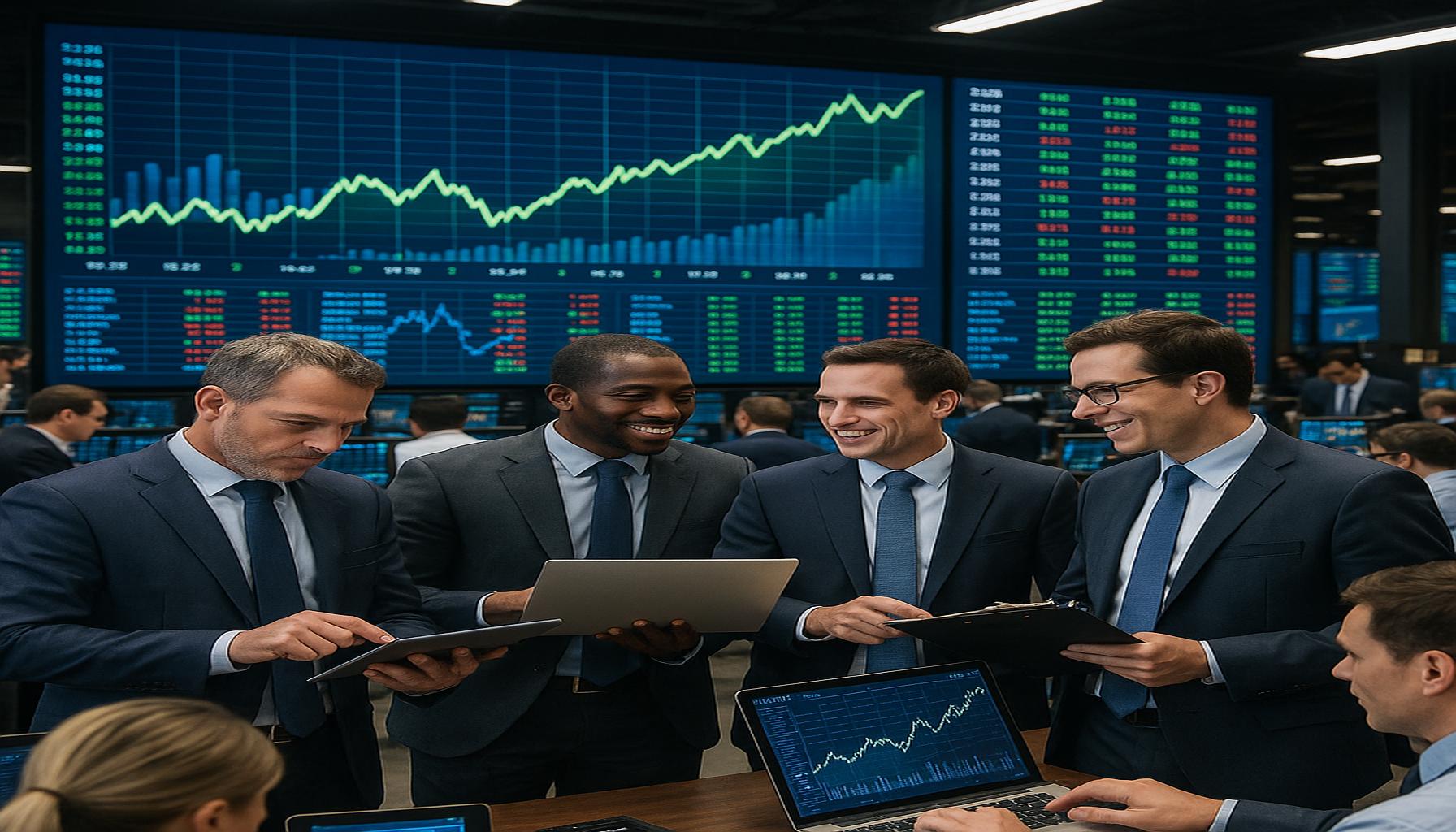
The Impact of Technology on the Stock Market
The stock market serves as a barometer for the economic health of the United States, influencing everything from individual savings to corporate investments. In today’s rapidly evolving financial landscape, the role of technology has become increasingly pronounced. Understanding how technology drives market trends is vital for investors looking to capitalize on opportunities that arise from such advancements.
Key Technologies Influencing Market Trends
Data Analytics has transformed the way investors approach stock selection and portfolio management. With the advent of big data and machine learning, sophisticated analytical tools can process vast amounts of information in real-time. For instance, hedge funds and asset managers utilize these tools to assess market conditions, evaluate risks, and predict potential price movements based on historical data. Investors can now identify patterns and correlations that were previously impossible to discern, leading to more informed investment strategies.
Another significant factor is High-Frequency Trading (HFT). This practice involves using powerful algorithms to execute trades at lightning speed, often completing thousands of transactions in mere seconds. HFT firms capitalize on tiny price discrepancies across markets, influencing overall market movement. For example, during volatile market conditions, these algorithms can exacerbate price swings, leading to sudden market drops or spikes, which can impact retail investors significantly.
Moreover, Access to Information has drastically improved thanks to technological advancements. Today, investors can access real-time market data, news updates, and analysis through various online platforms and mobile applications. This immediacy allows them to make quicker decisions. For example, if a company posts earnings that are significantly above expectations, investors can react almost instantaneously, buying shares before prices climb further. This fast-paced access to information democratizes trading, leveling the playing field for individual investors competing against institutional players.
Technology’s Role in Economic Recovery
As we consider the broader implications of technology on economic recovery, it is essential to note how these innovations can enhance liquidity in the market. During downturns, tech-driven trading platforms often engage a diverse set of investors, leading to increased buying and selling activity. This participation helps stabilize prices and fosters a quicker recovery. An example of such a phenomenon occurred during the early stages of the COVID-19 pandemic, when many retail investors used online brokerage apps, significantly contributing to market rebound.
In conclusion, technology is not merely a silent partner in the stock market; it is a driving force that shapes investor behavior and overall market performance. By exploring the unique technological trends at play, readers can equip themselves with the knowledge needed to navigate the complexities of the financial landscape. Understanding these connections between technology and the stock market is crucial as we move forward in an ever-changing economic environment.
DON’T MISS OUT: Click here to maximize your earnings
Transformative Technologies in Investing
The influence of technology on stock market trends extends beyond mere data analysis and trading speed; it reaches into the core of investment strategies and market dynamics. As technology continues to evolve, its transformative effects can be observed in several key areas that are reshaping how investors approach the market and, ultimately, how economies recover from downturns.
Algorithmic Trading and Market Dynamics
Algorithmic trading leverages complex mathematical models to execute trades on behalf of investors, allowing for increased efficiency and reduced pricing errors. Unlike traditional trading methods, where human intuition played a crucial role, algorithmic trading can examine multiple indicators simultaneously, providing an edge in making swift decisions. These algorithms can assess diverse factors, such as economic trends, geopolitical events, and even social media sentiment. For example, if news breaks about a major merger, an algorithm can analyze historical data related to similar events and execute trades almost instantaneously to capitalize on the anticipated stock movement.
However, while algorithmic trading can enhance liquidity, it can also introduce volatility. This is especially relevant during times of economic uncertainty. When algorithms respond to market shocks, they can lead to rapid fluctuations that may not reflect underlying economic fundamentals. As a result, understanding the balance between using algorithms for efficiency and maintaining market stability is crucial for future recovery efforts.
The Rise of Retail Investors
Another significant shift brought about by technology is the rise of retail investors in the stock market. With the rise of user-friendly trading platforms and mobile apps, individuals have more access than ever to financial markets. This democratization of trading raises important questions regarding traditional investment practices.
Here are some key points regarding the impact of retail investors:
- Access to Resources: Retail investors today have access to a wealth of resources, including educational materials, online forums, and trading simulations that were not available in the past.
- Market Sentiment: The collective buying power of retail investors can significantly influence stock prices, as evidenced by events like the GameStop rally, where retail investors collaborated via social media platforms.
- Behavioral Insights: Retail investors tend to react to news and trends differently than institutional investors, leading to unique market movements that can create both opportunities and risks.
The effects of the rise of retail investors become especially pronounced in times of crisis when consumer confidence is low. During downturns, heightened retail participation can provide essential liquidity, supporting market recovery. As exhibited in the recent economic upheavals, the power of the retail investor can act as a stabilizing force, making their role pivotal in the economic recovery narrative.
In summary, technology is revolutionizing investing practices and reshaping market dynamics in ways that influence recovery from economic downturns. By examining algorithmic trading and the active participation of retail investors, we gain valuable insights into the intersection of technology and economic resilience.
DISCOVER MORE: Click here to find out how to apply
Innovative Financial Technologies Shaping Investment Landscapes
The integration of innovative financial technologies (fintech) into the stock market is reshaping investment landscapes in profound ways. These technologies not only broaden access but also enhance the sophistication of investment strategies employed by both institutional and retail investors. As economies navigate through recovery phases, several fintech advancements play critical roles in fostering resilience and growth.
Robo-Advisors and Wealth Management
Robo-advisors have emerged as a significant force in wealth management, enabling individuals to invest with minimal fees and well-structured portfolios. Utilizing algorithms, these platforms assess the risk tolerance and financial goals of users to create customized investment strategies. For the average investor, the accessibility of robo-advisors democratizes investment opportunities that were previously available primarily through traditional financial advisors.
The implications of this technology are crucial, especially during periods of economic downturn. For instance, when the market is volatile, robo-advisors can automatically rebalance portfolios based on pre-set strategies, maintaining diversification and reducing exposure to risk. This level of automation provides a safety net for individual investors who may be less experienced in navigating challenging market environments.
Data Analytics and Predictive Insights
Moreover, the advent of big data analytics is revolutionizing how market participants make informed decisions. With the ability to process vast amounts of information from diverse sources—such as economic reports, traffic patterns, and even consumer behavior—investors can uncover trends that may not be immediately visible through traditional analysis.
For instance, algorithms can analyze spending habits during significant events or crises, helping investors adjust their strategies based on expected consumer behavior shifts. Data-driven insights allow investors to anticipate market movements more accurately, providing a competitive edge that plays a crucial role in economic recovery strategies.
Blockchain and Transparency in Trading
The introduction of blockchain technology is also changing the game in how stocks are traded and managed. By offering a decentralized ledger system, blockchain enhances transaction transparency and security, reducing risks associated with fraud. This increased level of trust in the system can encourage greater participation from both institutional and retail investors.
Furthermore, blockchain can facilitate new forms of assets, such as tokenized stocks, allowing fractional ownership. This means that investors can purchase a small portion of a stock rather than needing to buy a full share, making investing more accessible to a broader demographic. As a result, blockchain technology not only supports liquidity but also strengthens confidence in the stock market, which is essential for economic recovery.
Social Trading Platforms
Finally, the rise of social trading platforms has enabled investors to share insights and strategies, effectively creating a community-driven approach to investing. Through these platforms, users can observe the trading behaviors of experienced investors and replicate their strategies in real-time. During economic recovery periods, this peer-to-peer knowledge exchange can empower new investors, enhancing overall market participation and stability.
In summary, innovative financial technologies such as robo-advisors, big data analytics, blockchain, and social trading platforms are fundamentally altering investment landscapes. By enhancing efficiency, accessibility, and transparency, these technologies contribute significantly to the mechanisms of economic recovery, demonstrating their vital importance in the contemporary stock market environment.
DON’T MISS: Click here to learn about common credit card pitfalls
Conclusion
In conclusion, the stock market’s recovery in the wake of economic challenges hinges significantly on the rise of innovative technologies. As we have seen, tools such as robo-advisors, data analytics, blockchain, and social trading platforms not only enhance investment strategies but also widen access to financial markets for all types of investors. This democratization of investing empowers individuals and fosters a more vibrant economic environment.
The capabilities offered by fintech allow investors to navigate the complexities of market recovery with greater agility. For example, while traditional investment approaches may fall short during volatile times, the automated features of robo-advisors and real-time data analytics equip investors to make informed and timely decisions. Blockchain further ensures that transactions are secure and transparent, fostering a sense of trust that is vital for attracting more participants into the market.
Additionally, the communal aspect of social trading platforms creates an inclusive atmosphere where aspiring investors can learn and grow alongside seasoned pros. This peer-to-peer sharing of knowledge not only boosts individual confidence but also strengthens market stability during turbulent times.
As technology continues to advance, its role in shaping stock market trends during periods of recovery becomes clearer. Ultimately, embracing these tools and adapting to new investment paradigms will be crucial for investors looking to thrive in a rapidly evolving financial landscape. The future of the stock market, characterized by resilience and inclusivity, is undoubtedly intertwined with the innovative financial technologies that pave the way for better economic outcomes.

Linda Carter
Linda Carter is a writer and expert known for producing clear, engaging, and easy-to-understand content. With solid experience guiding people in achieving their goals, she shares valuable insights and practical guidance. Her mission is to support readers in making informed choices and achieving significant progress.